

Non-Destructive Testings

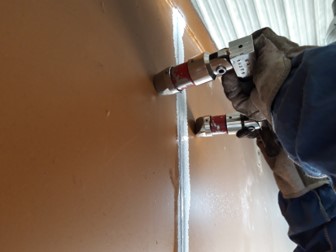
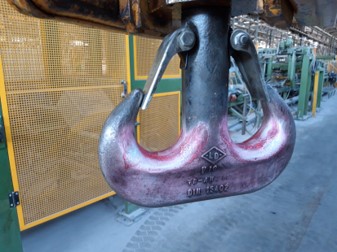
Non-Destructive Testings (TnD) are the complex examinations, tests and inspections conducted by using methods that do not alter the material and do not require the destruction or removal of samples from the structure in question. The Non-Destructive definition stays for this reason.
The most commonly used methods are based on ultrasound, X and gamma radiation, vibrations, electromagnetic induction, penetrating liquids, as well as methods such as thermography, endoscopy, strain gauge, level measurement, noise emission, neurography, holography, and optical interferometry, tomography and acoustic holography, etc.
The investigations results conducted by applying these methods are the basis for evaluating the quality of a product, for examining the structural integrity of a component, for diagnosing and researching the causes of machinery malfunctions.
CREA offers:
UT – Ultrasound: a technique that makes use of high-frequency acoustic waves (in the order of MHz for metallic materials, kHz for more heterogeneous materials such as stone and concrete conglomerates) and which also includes the TOFD methodology;
MT – Magnetoscopic tests: it is based on the attraction of ferromagnetic particles and dispersed in a liquid attracted by the magnetic field dispersed near any cracks;
PT – Penetrating liquids: it is based on the enhancement of the visibility of open surface defects through the use of a liquid substance that penetrates by capillarity into the defects (penetrant) and a background (detector or the piece itself);
VT – Visual examination: Visual test, visual control system.
UT - Ultrasound
The non-destructive control of products or materials with the ultrasound method is based on the phenomenon of reflection that an acoustic wave undergoes when, spreading inside a material, it encounters an obstacle to its propagation. If the obstacle is normally placed at the direction of incidence of the wave, this returns towards the source that had generated it.
Ultrasounds are acoustic waves with frequencies above the hearing threshold (0.5¸25 MHz).
The ultrasound pulse is transmitted into the material by a special transducer, commonly called a probe.
The impulses reflected by the defect surfaces or by the part walls are picked up by the transducer, transformed into electrical signals and represented on the device’s cathode ray screen.
It is always possible to estimate the actual dimensions of the internal defect with some accuracy and therefore accept or discard the piece based on the provisions of the applicable regulations or specifications.
The field of greatest application is the control of welds (full penetration), sheet metal, forgings, stampings, castings, and composite materials; it is also used for the sizing of defects due to operation (e.g. extrusion press columns or in any case details that work with difficulty during their operation).
They are divided into two classes: contact technique, non-contact or immersion technique.
In the first case, the transducer is placed directly on the piece, using water, oil, gelatin or other as an acoustic coupler (technique applied to medium / large products and welded structures).
In the second case, the probe is always kept at a certain distance from the piece (the technique used in the control on large series of identical parts, with automatic controls).
MT - Magnetoscopic tests
Non-destructive investigation method for the detection of surface and subsurface defects in ferromagnetic materials. Typical cases of application of magnetoscopic method are steel castings with a ferritic structure, forgings, extrusions, moldings, welds and other ferritic matrix components. Important for the detection of defects is that these are oriented so as to be intercepted by the lines of force of the induced magnetic flux; for this reason the same piece must be at least magnetized in two directions, mutually orthogonal.
The devices (pacometers) on the market generally consist of a detection control unit to which a probe with two coils arranged at a predetermined distance is connected. Inside the probe, an alternating current flow, with a predetermined frequency, creates an elongated magnetic field according to the axis of the probe.
The metal objects that intercept the magnetic field change the coil voltage to the extent expressed by the diameter/iron cover ratio of the metal object. This allows reading on an analog display of the control unit the diameter of the ferrous materials, the position, and the relative concrete cover with a measurement uncertainty of ± 1 cm.
There are numerous techniques for examining the magnetoscopic method. The choice depends on numerous factors, among which the main ones are: the type of product to be controlled (welding, forgings, molded, extruded, etc.), its shape, the surface state of the piece (welded, ground, rectified, sandblasted, etc. ), the control method (with test leads, with an electromagnet, with fixed bench, etc.), the type of magnetic particles to be used (fluorescent, dry, contrasting color, etc.)
PT - Penetrating liquids
Inspection with penetrating liquids is a particularly suitable method to highlight and locate surface discontinuities, such as cracks, porosity, folds, quickly and economically and with great accuracy.
Penetrants include both red products visible in white light and fluorescent products; in the latter case, the indication is highlighted under ultraviolet light.
However, for a correct understanding of the method, three fundamental terms must be defined:
Indication (signal): that which highlights the presence of a discontinuity of the material. Some indications may be irrelevant or false.
Discontinuity (flaw): an interruption of the normal physical structure or configuration of a part, such as a crack, a forging fold, a die groove, an inclusion or porosity. The presence of a discontinuity does not necessarily exclude the use of the detail.
Defect (defect): a discontinuity deemed “unacceptable” by the specifications in which it operates, as it interferes with the use of the particular.
VT - Visual tests
The principle is based on the use of light as a defect detection medium. By analyzing the direction, amplitude and phase of the light diffused or reflected from the surface of an opaque object, or transmitted within a transparent medium, it is possible to obtain information on the physical state of the object under examination.
The term visual inspection or optical methods indicates all those techniques that allow direct observation of surfaces even if placed in remote or inaccessible areas, the most advanced methods also allow the detection of internal defects in materials. Optical methods allow detecting a huge number of defects such as cracks, corrosions, color alterations due to overheating, erosion, deformations, irregularities of the surface finish, assembly errors of mechanical systems, dimensional variations, etc.
In all cases where the surface to be examined is easily accessible, the examination is carried out with the naked eye, with the aid of a magnifying glass, or with cameras. In this case it is possible to conduct even very sophisticated examinations with image processing techniques. The inaccessible surfaces can be inspected visually with rigid or flexible fiberoptic endoscopes, which also allow access to geometrically complex details. The most recent are made up of cameras with a diameter of 6-8 mm which are introduced and guided inside the cavity to be examined.
The main limitation of this method consists in the possibility of detecting only surface defects, moreover, the interpretation of the signal is subjective. On specular surfaces all those techniques that exploit beams of light grazing the surface to detect, through the phenomenon of diffusion, the presence of defects is unusable.